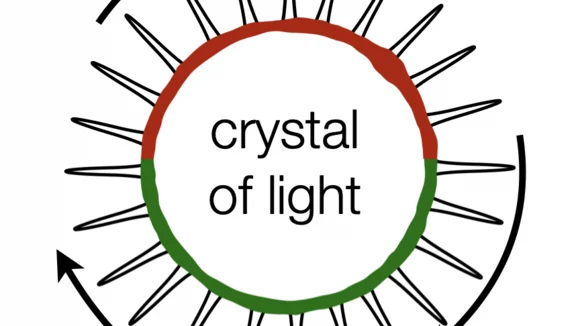


Nature organizes itself: For example, individual cells create an organism. Researchers are translating the principles of self-organization to technical applications – read more in the RUB article.
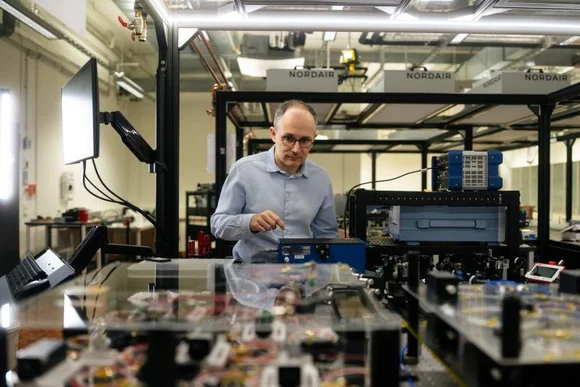
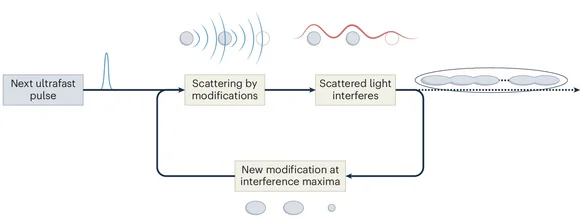
By exploiting nonlinear feedback arising from the interaction of ultrafast laser pulses, self-organized nanolines that appear to defy the limits of diffraction are shown to cut, dice, and structure optical materials, fabricating true zero-order sapphire waveplates and crystalline micro-prisms.
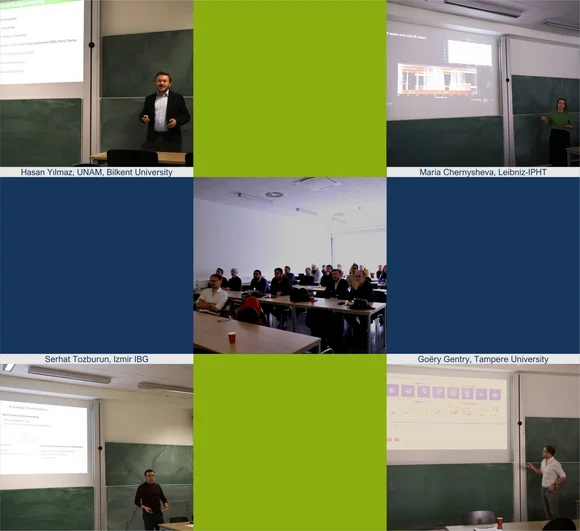
By exploiting nonlinear feedback arising from the interaction of ultrafast laser pulses, self-organized nanolines that appear to defy the limits of diffraction are shown to cut, dice, and structure optical materials, fabricating true zero-order sapphire waveplates and crystalline micro-prisms.
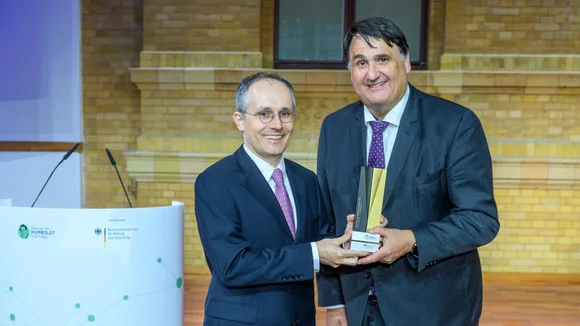
Die Bundesministerin für Bildung und Forschung Bettina Stark-Watzinger und der Präsident der Alexander von Humboldt-Stiftung Prof. Dr. Robert Schlögl haben am 13. Mai 2024 in Berlin die Alexander von Humboldt-Professuren verliehen.
On January 31, the Faculty Council of the Faculty of Physics and Astronomy approved the co-optations of Prof. Dr. Serim Ilday and Prof. Dr. F. Ömer Ilday.
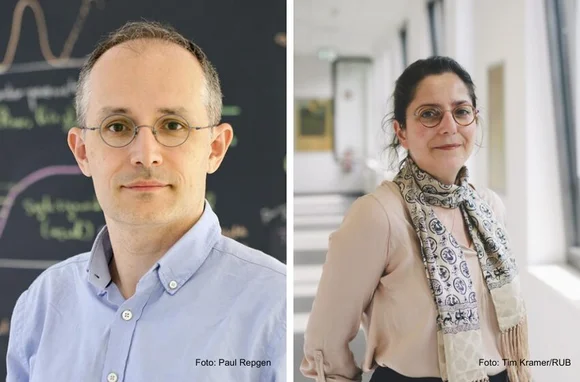
The renowned physicist receives the most highly endowed research award in Germany. In Bochum, he is to open up new fields of research in materials science and establish a research centre.
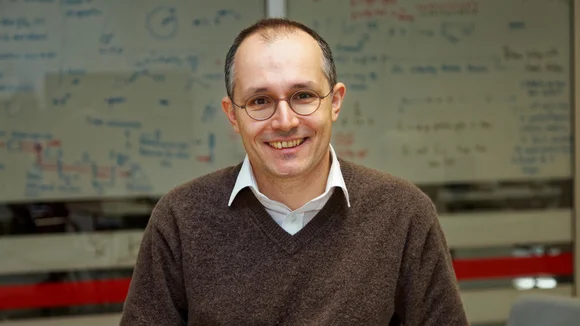
F. Ömer İlday has played a seminal role in developing ultrafast laser technology, transforming the field of non-linear laser-matter interactions in the last few years. He is now invited to join Ruhr-Universität Bochum to explore new research fields in materials science and establish a world-class research centre.
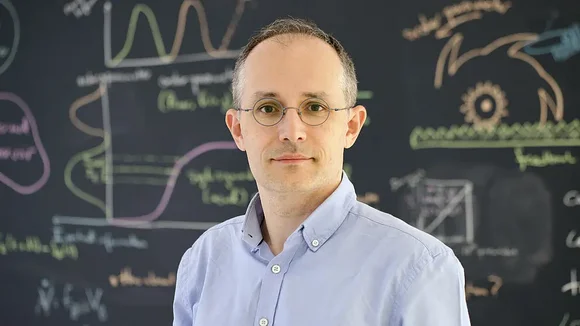
F. Ömer İlday promovierte 2003 an der Cornell University, Ithaca, USA, und arbeitete ab 2003 als Postdoc und ab 2005 als Forschungswissenschaftler am Massachusetts Institute of Technology, USA. Im Jahr 2006 wechselte er als Professor für Physik an die Bilkent-Universität in Ankara, Türkei. Von 2014 bis 2023 war er dort Professor für Physik und Elektrotechnik.